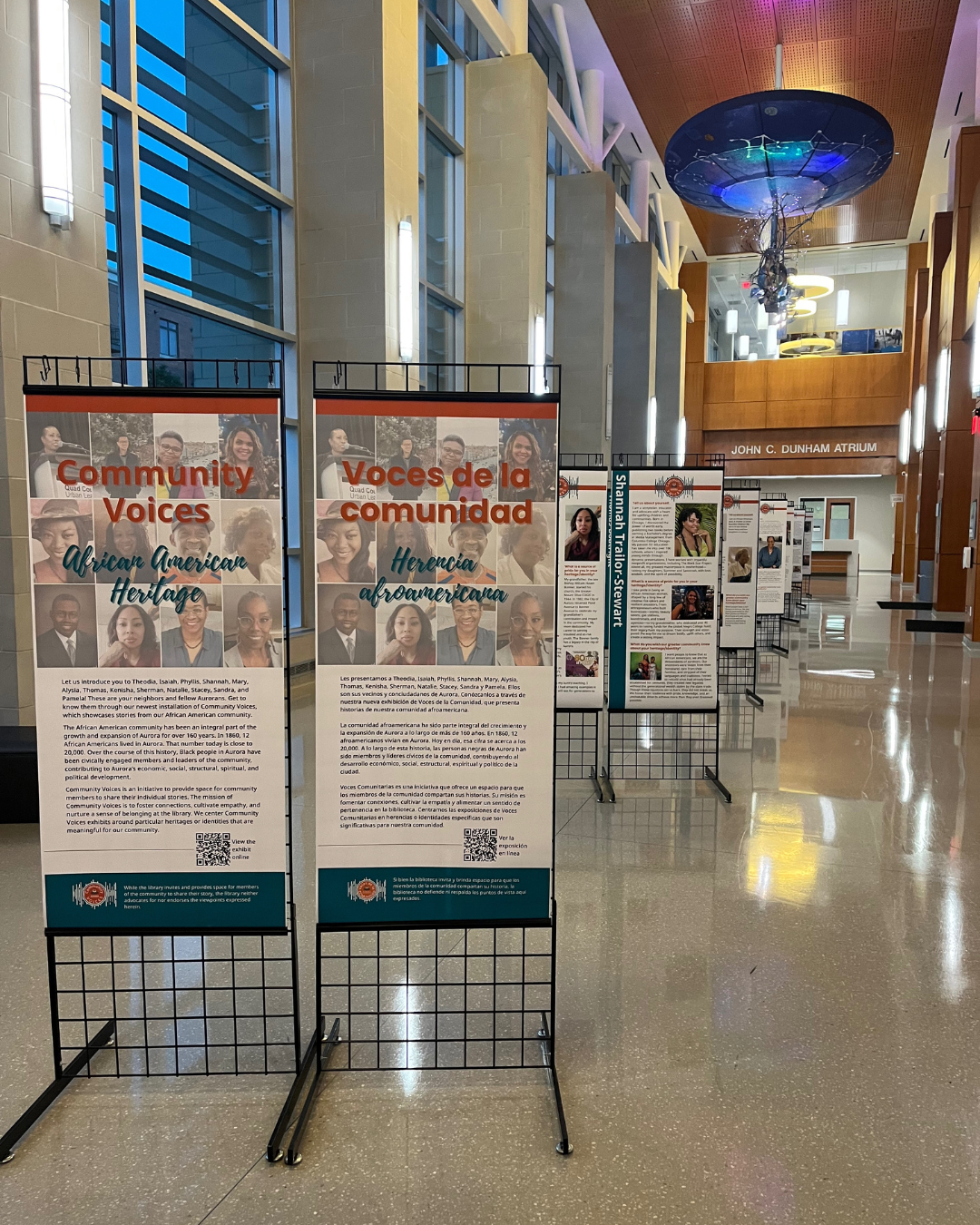
Community Voices
Your Library, Your Voice!
APLD invites Aurora residents to participate in our Community Voices project and share your story!
Community Voices is a library initiative to provide space for community members to share their individual stories.
The mission of Community Voices is to celebrate diverse experiences, foster connections, cultivate empathy, and nurture a sense of belonging at the library.
We center Community Voices exhibits around heritages or identities that are meaningful for our community.
Next Exhibit: Changemakers
For our next exhibit, we are seeking nominations for individuals who demonstrate a deep and sustained commitment to serving their community here in Aurora. These are folks who care deeply about their neighborhood or community and have put in the work year after year in service of a cause or organization at the local level.
May 1-June 30: Accepting nominations. Find the nomination form below!
July 1-August 31: Accepting submissions from nominees
November 6-December 6: Exhibit on display
Previous exhibits:
- African American Heritage: June 2025
- South Asian Heritage: November 2024
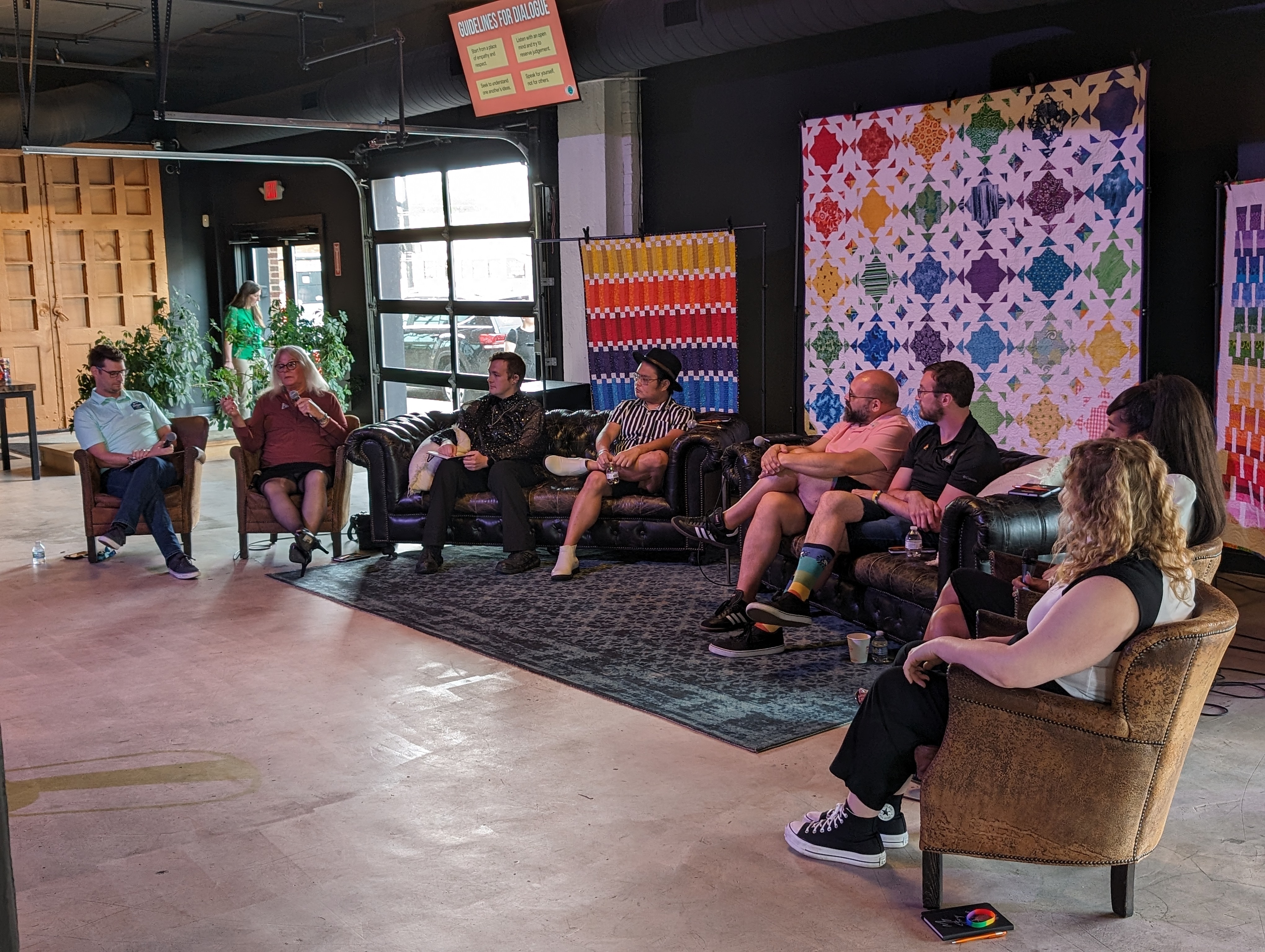
- Pride: June 2024
- Hispanic Heritage: September/October 2023
What is Community Voices?
- Community Voices is an exhibit series for and by the community. The library partners with members from the community to create an exhibit highlighting individual stories to display at each library location.
- Participating community members will respond to 3 prompts provided by the library, and library staff will create posters to display at all locations for the designated month.
- Participants share up to 3 photographs with their submission to illustrate their story and bring life to the exhibit.
Why share your story?
- This is YOUR library, and you BELONG here! Claim your space at the library and in your community by sharing your voice.
- Introduce yourself and your heritage/identity to your neighbors to foster connections in the community.
- Cultivate empathy and emphasize critical engagement: specific stories from people, communities or neighborhoods make it harder to deny those people their agency, identity, and place in the larger narrative.